Note: These steps will NOT work with Jeep Wranglers, Jeep Gladiators, or Ford Bronco SIDE doors as those doors do not open wide enough.
Return Information:
Returns due to fitment or sizing issues require inspection, reconditioning, and brand-new packaging to make the product “like new” again—costs that are often avoidable by reviewing the details before ordering. Once a box has made a round trip, it can’t be reused, and each return requires hands-on work to restore the steps for resale.
Returns for this item are subject to a restocking fee, and return shipping is the responsibility of the customer.
We promise: a few minutes of prep now saves everyone time, money, and frustration later (including your back).
Two questions and a tape measure. Built from thousands of real customer
setups — not lab specs.
Read this first: These results come from real customers who own and use the
Big Ass Steps. Vehicle models change every year, so we can’t guarantee a fit for any specific
make or model — and your make and model alone won’t answer this. The
only thing that settles a back-seat fit is a measurement. Grab a tape measure before you start.
Step 1 — Where will your dog load up?
You’re in great shape
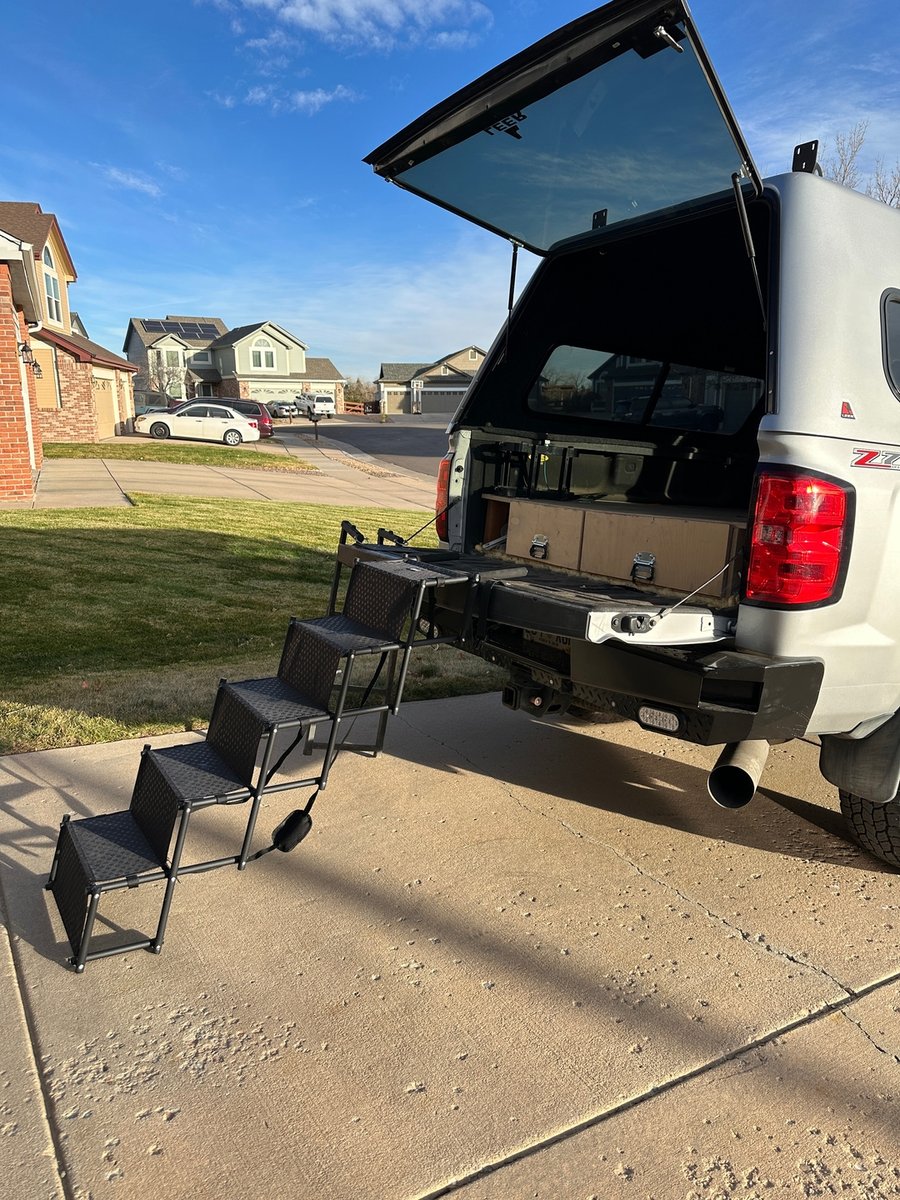
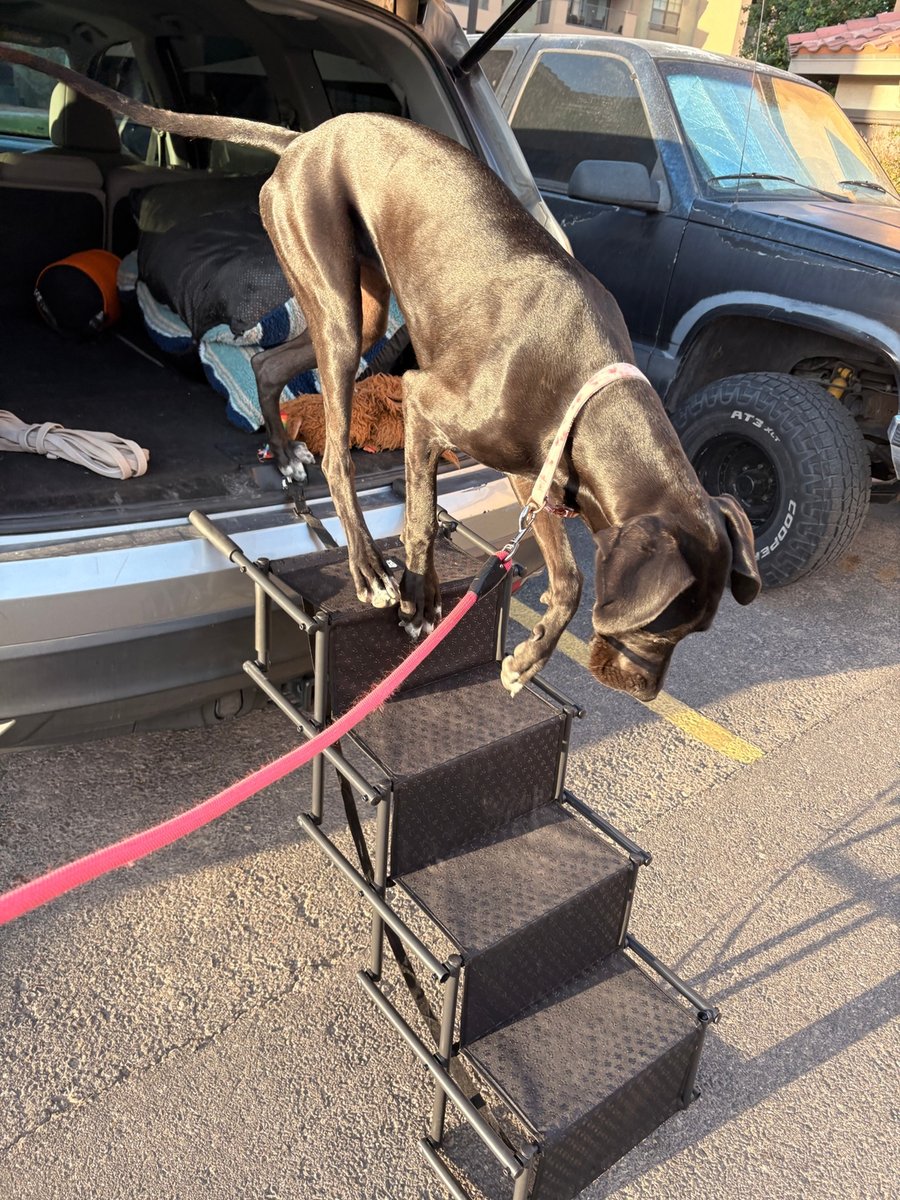
Loading through a rear hatch, cargo area, or truck bed (tailgate down) is the easy case.
There’s no door to fight and no width to measure — the Steps have room to sit flat.
This works for almost every vehicle. Skip ahead and pick your size below.
Then we need a number
Back-seat loading is the one place fit gets specific, and it is the source of nearly every
return we take. It comes down to one measurement: the clear width of your door opening at the
sill, where the top support arms have to rest flat.
Step 2 — Measure your door sill opening
19.25″
— the CLEAR opening the arms need to rest flat and secure
Here’s the honest math. The 4-Step is 18.9″ across. The 5-Step is a fat 19″.
Hit either of those exactly and you have zero margin — no room for a curved corner, a
trim panel, or a door that doesn’t swing quite as far as you thought. So we tell you
19.25″. That quarter-inch of daylight is the difference between
“it technically fits” and “it sits flat and solid every single time.”
Don’t measure the door. Don’t eyeball it. Measure the opening.
How to measure — 30 seconds
Open the rear door as far as it goes.
Put your tape across the door sill, at the base of the seat, front edge to back edge.
Measure the narrowest point — sills have curved corners that pinch
the usable width well inside the door’s full swing. That curve is what catches people out.
Take the photo with the tape still in place. Leave it stretched across
the sill and shoot straight down at it. That one photo shows us both your number and where
you took it from — so if you measured a different line than we would have, we can tell
you on the spot instead of going back and forth.
Good — you have the width. Two things to check before you buy:
• Door rake. Look at your door opening from the side. If the opening
slopes back sharply (a raked B-pillar or a steeply angled door frame), it can push the Steps
forward into the door even when the width is fine. This is what rules out several
crossovers — measure, then look.
• Seat height. If your seat sits above the sill, a rigid seat extender
gives the upper arms a proper resting surface and makes a marginal fit solid. Several of our
back-seat truck customers run one.
If it’s tight but clears, a strip of paint-protection film on the sill keeps it scratch-free.
Straight answer: this is our most common return. Under 19.25″ of clear
sill, the arms can’t rest flat, and a step that doesn’t rest flat isn’t one
your dog should be using. We’d rather tell you now than take the return later.
You can still buy — the Steps are returnable and some customers make a tight
opening work with a rigid seat extender — but go in knowing it’s a gamble at the
back seat. Two better paths:
• Load from the hatch or truck bed instead. Same Steps, no width
problem, and the fit is basically automatic.
• Send us a door-open photo with your measurement and we’ll give
you our honest read before you spend a dime.
Go measure — it takes 30 seconds and it’s the whole ballgame.
We can’t answer a back-seat fit from a year, make and model, and neither can anyone else.
Two identical trucks with different trims and seat configurations measure differently. Follow
the four steps above, then come back and pick your answer.
1. Door swingMany rear doors only open to about 75°. If yours
won’t swing near 90°, you never get the full sill width no matter what the
specs say.
2. Curved sill cornersThe rounded corners at each end of the sill
narrow the usable opening below the door’s own width. Always measure the narrowest point.
3. Door rakeA steeply angled opening forces the Steps forward into
the door as they seat. Width can be fine and rake still kills it — this is what ruled
out the BMW X5 at the side door.
4. Square to the vehicleThe Steps have to extend straight out,
perpendicular to the vehicle. If your opening only lets them sit at an angle, they’ll
seat twisted — and a twisted step is not a safe step.
SUVs at the hatch Yukon / Yukon XL, Suburban, Tahoe, RAV4, MDX
Most 4-door trucks with a wide-opening rear door still measure — trim and seat config change the sill
❌ Known tight or no-fit at the back door
Jeep Wrangler / Gladiator and most Jeeps — door too narrow
Jeep Grand Cherokee door curve and angle — hatch works fine
Toyota 4Runner opening won’t let steps rest safely
Ford Bronco same narrow-opening issue
BMW X5 door rake pushes the steps into the door — hatch works fine
Honda Ridgeline back-seat door — but the bed works great
Tundra Double Cab / Honda Pilot / Chevy Colorado tight — often only an angle works
See customer-confirmed rides ▾
Real setups our customers have confirmed, with where their dog loads. Loaded at a rear hatch
or truck bed, almost everything works — these are the ones confirmed by make. Seeing your
vehicle here is a good sign, not a guarantee: year, trim and seat config change
the sill, so still measure. If your vehicle isn’t here, it doesn’t mean it won’t
fit — we just don’t have data on it yet. Send us a photo and we’ll add it.
Trucks
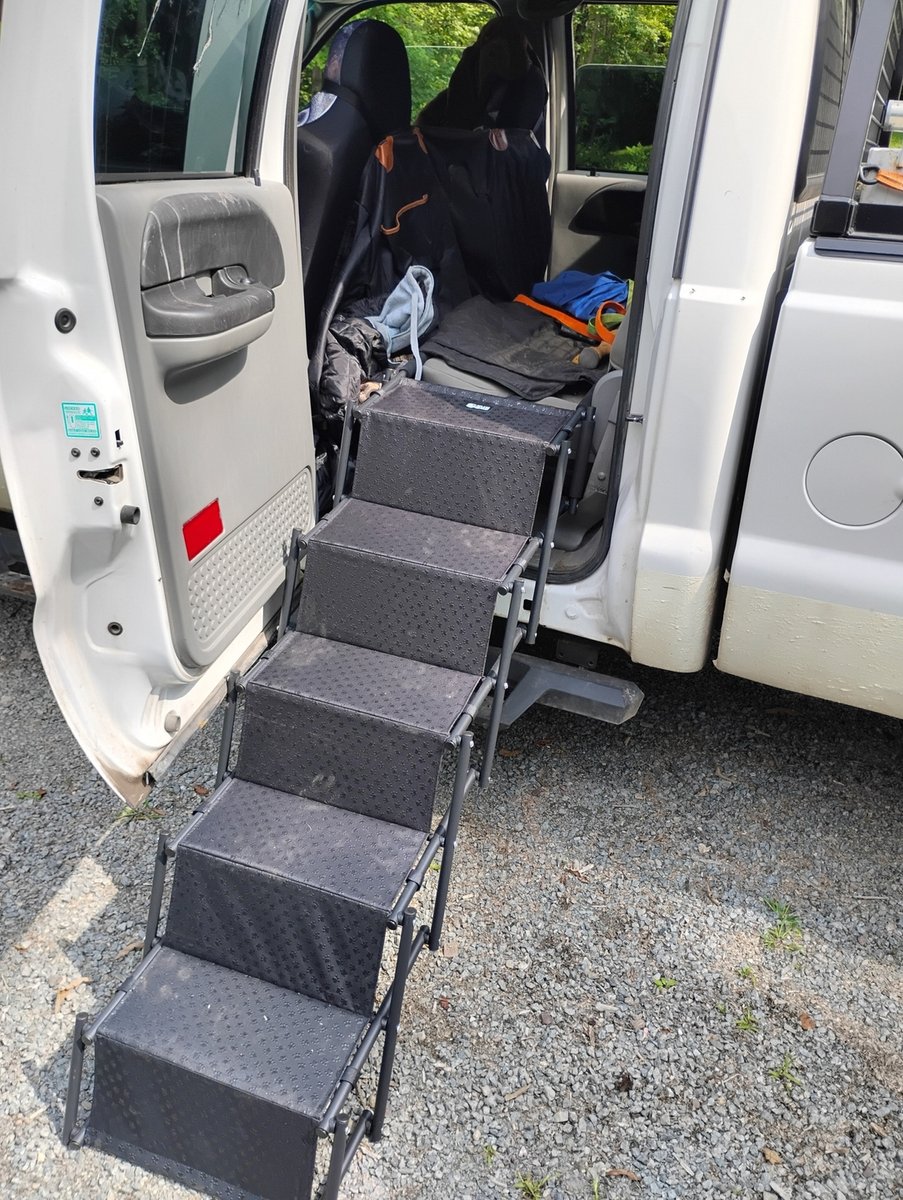
Ford F-150 / F-250 / F-350back seat
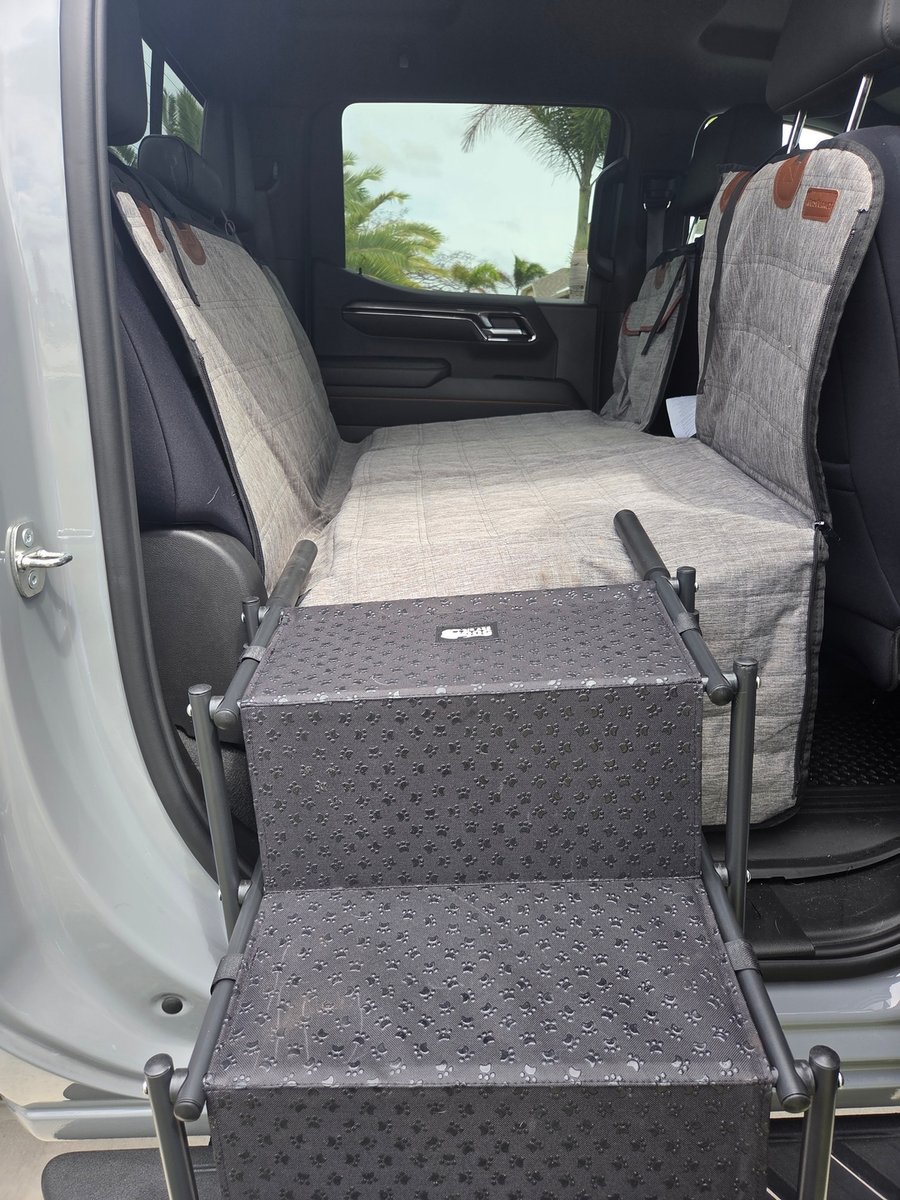
Chevy Silveradoincl. 2025 & Trailboss 4x4 · back seat
GMC Sierra 1500back seat · with rigid seat extender
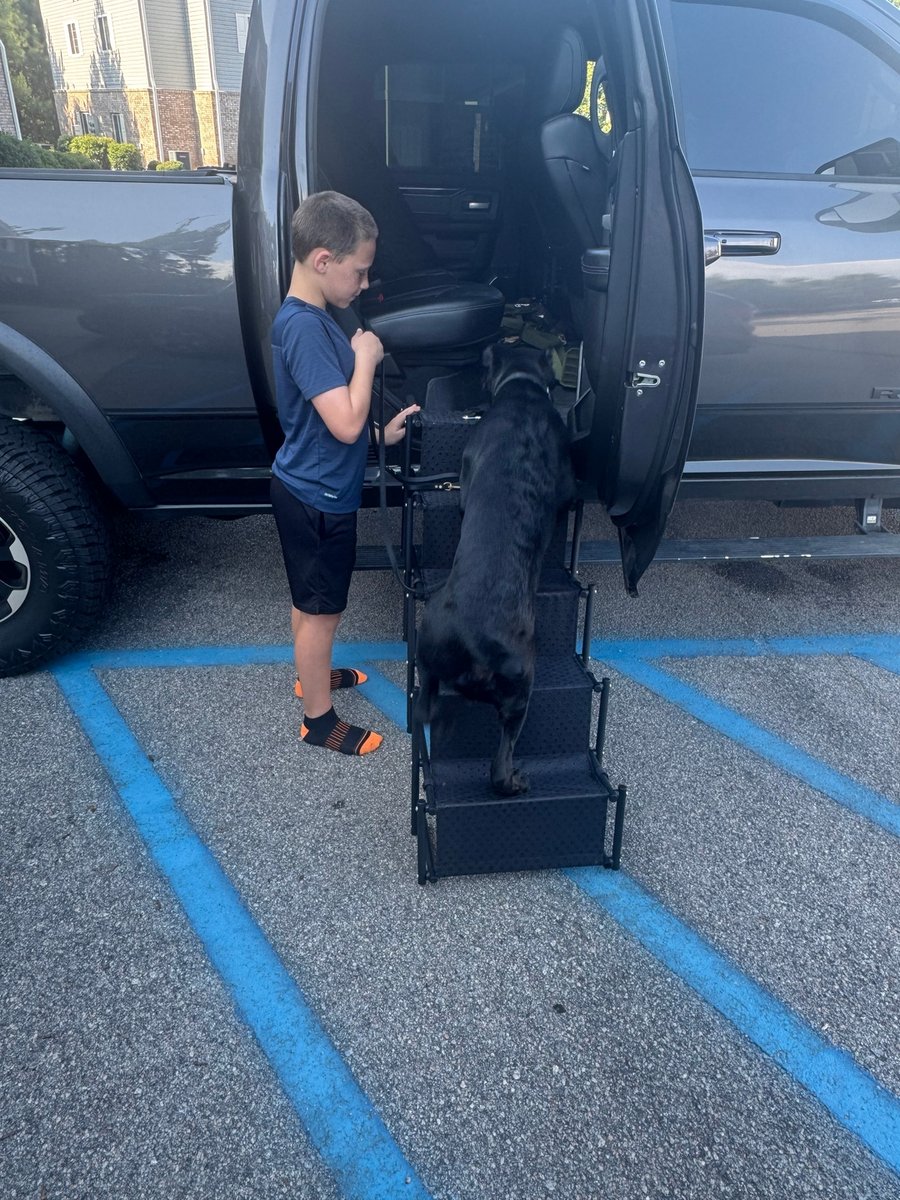
Ram 2500side door
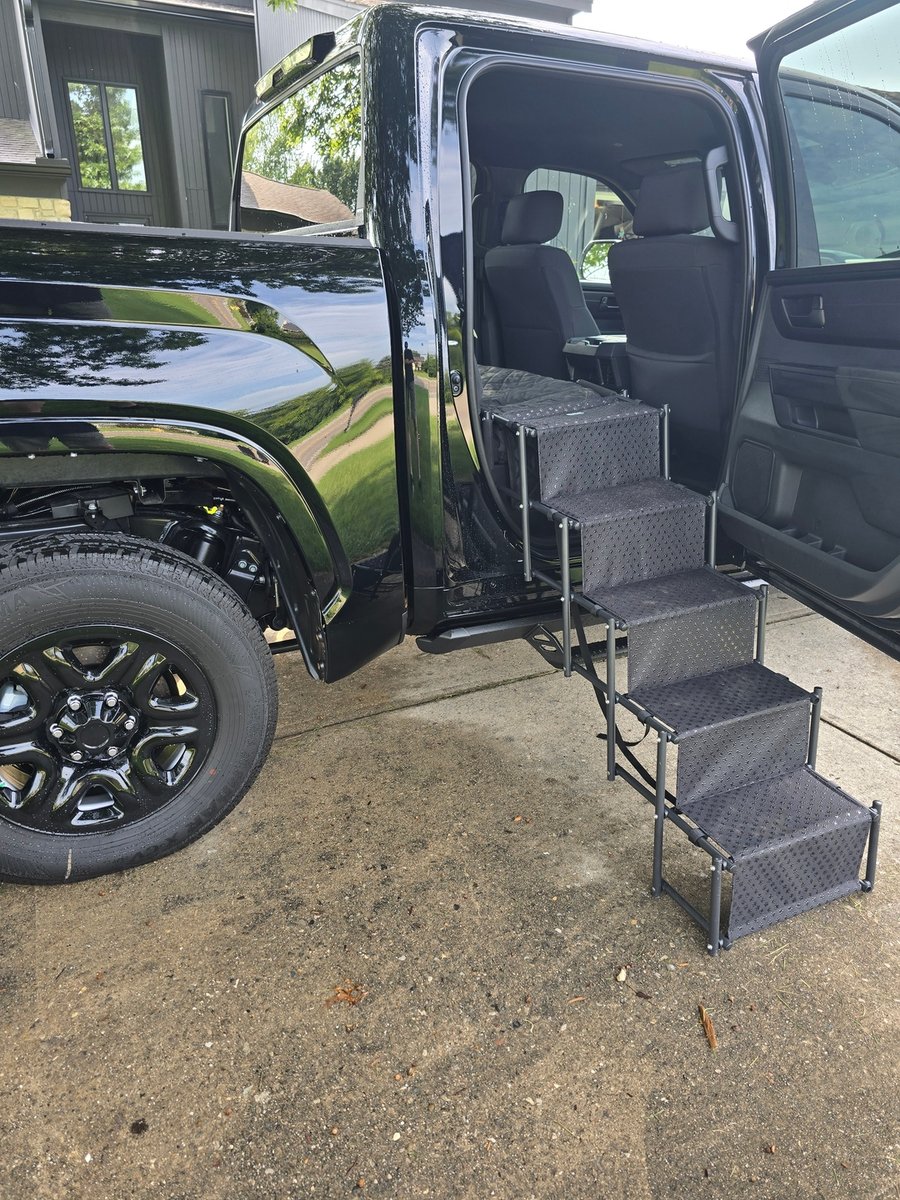
Toyota TundraCrewMax · back seat
Toyota Tacomabehind front seat
Any pickup bedtailgate down
SUVs & crossovers
GMC Yukon / Yukon XLrear hatch
Chevy Suburbanrear cargo
Chevy Tahoecargo area
Toyota RAV4cargo area
Ford Explorerrear hatch
Acura MDX (2023)back seat
Subaru Outback / Crosstrekback seat
Lexus full-size SUVrear
Step 3 — 4-Step or 5-Step?
Start with where your dog steps
off — that decides it. Then confirm with rise-height: measure from the ground to that
surface.
4-Step
Stepping off onto the floor
Confirms at a 28″–34″ rise
Cargo floors, truck bed floors, and back-seat footwells — anywhere your dog
lands on the floor rather than climbing to the seat. The steadier pick. Measuring right around
34″? Go 4-Step.
5-Step
Stepping off onto the seat
Confirms at a 34″–40″ rise
Tall trucks and lifted rigs where the dog goes all the way up to seat level.
Keep it within its 34″+ range so it stays rock-solid underfoot.
Same truck, two different answers: a dog loading to the floor of a Sierra back seat wants
the 4-Step; a dog loading onto the seat of the same truck wants the 5-Step. Decide where
your dog lands first, then check the height.
Measuring under 28″? Neither unit is right for you. Below about 28″
the 4-Step has to stretch out so far that it flattens toward a ramp instead of a staircase, and it
stops being stable underfoot. Minivans, sedans, and low crossovers usually land here. We’d
rather point you elsewhere than sell you the wrong thing — email us and we’ll tell you
who does make one for your height.
Get our honest read
Loading from a hatch or truck bed? You probably don’t need this — you’re
already good. This is for back-seat loading, tight measurements, and anyone who wants a
human to look before they spend a dime.
Fitment guidance is based on real-world customer purchases and use and is provided as a guide only.
Vehicle designs vary by year, trim, and configuration, so we cannot guarantee fitment for any
specific vehicle — including vehicles listed above as customer-confirmed. The Big Ass Steps
are returnable; return shipping is the customer’s responsibility. When in doubt, measure your
sill, watch the fitment videos, and email us a photo before purchasing.
Big Ass math
How much dog do you deadlift a year?
This whole company started with a 200-lb deadlift. Yours shouldn't happen every time you go to the park. Slide in your numbers.
62,400lbs of dog lifted a year
That's in and out of the car, every ride. About 12 pickup trucks' worth of lifting.
8 lbsWhat you lift with Big Ass Steps (4 Step). Once. Your dog does the rest.
Fit Finder · 20 seconds
Will they fit your ride?
Tell us how your dog gets in and how high the floor is. We'll tell you straight which set fits, or if neither does. We'd rather talk you out of a sale than take a return.
1 · Where does your dog load?
2 · How high is the floor?
Tape from the ground to the spot your dog's front paws land.
3 · Measure the door sill at its narrowest point. Both the 4 Step and 5 Step are 18.9" across. Is your clear width at least 19.25"?
Guessed wrong anyway? The $20 Big Ass Size Swap covers your return label and ships the right size back out.
Our honest read
Get the 5 Step
36" sits right in the 5 Step's 34–40" sweet spot.
Email [email protected] a photo with a tape measure laid across it and we'll give you our honest read.
The one rule
Square to the ride. 90°. Every time.
Set them straight at the opening and the full 200-lb rating holds. Stretch them out at an angle and they can fold under load. That's why the Fit Finder above won't sell you a set below 28": the 4 Step would flatten toward a ramp.
Heads up: Jeep Wrangler, Jeep Gladiator and Ford Bronco side doors don't open wide enough.
Watch them climb
“Will my dog actually use them?”
4.7
176 reviews on Big Ass Steps · 4.9 across 741 store reviews
UpStraight into the truck, no liftDownNo more jumping out on old jointsAnywhereTrailhead, campsite, vetStows flatFolds behind the seat, room for the dog
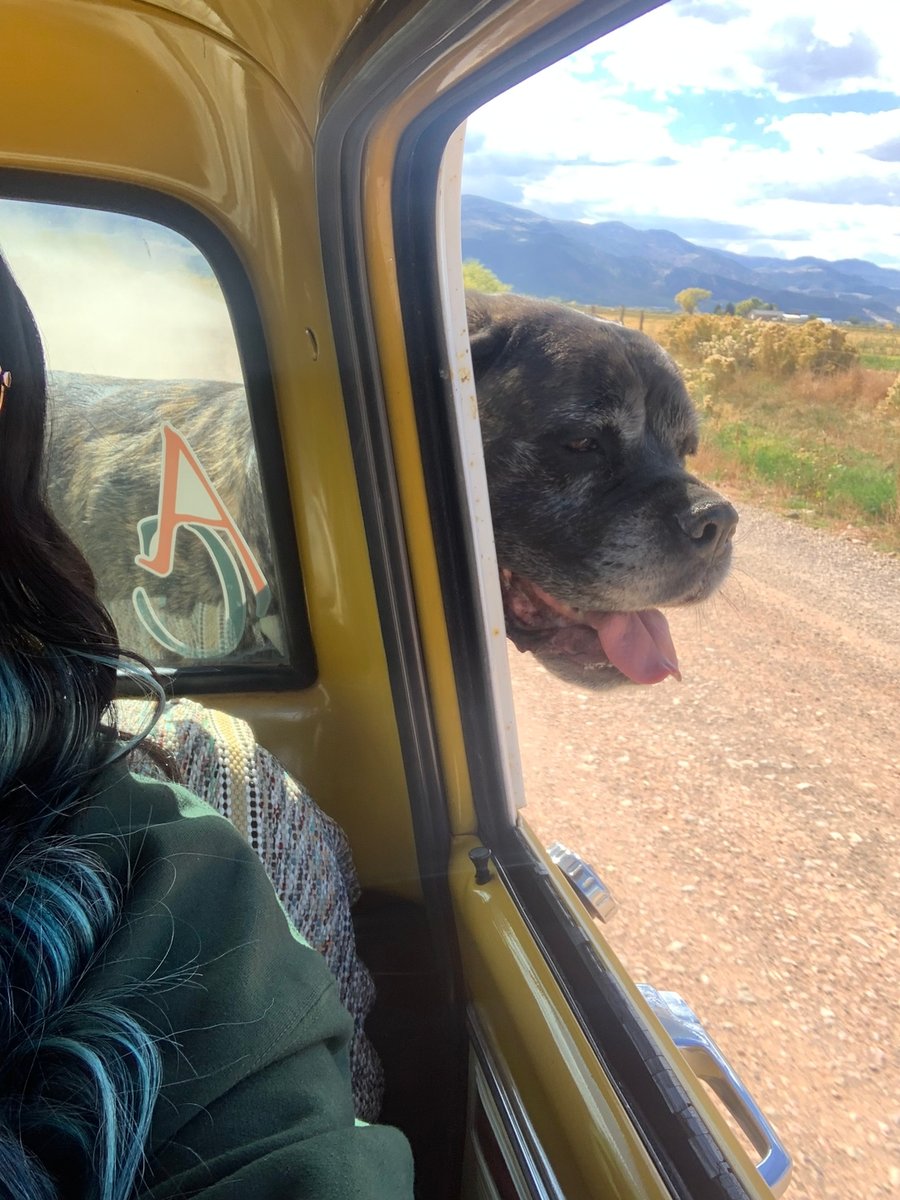
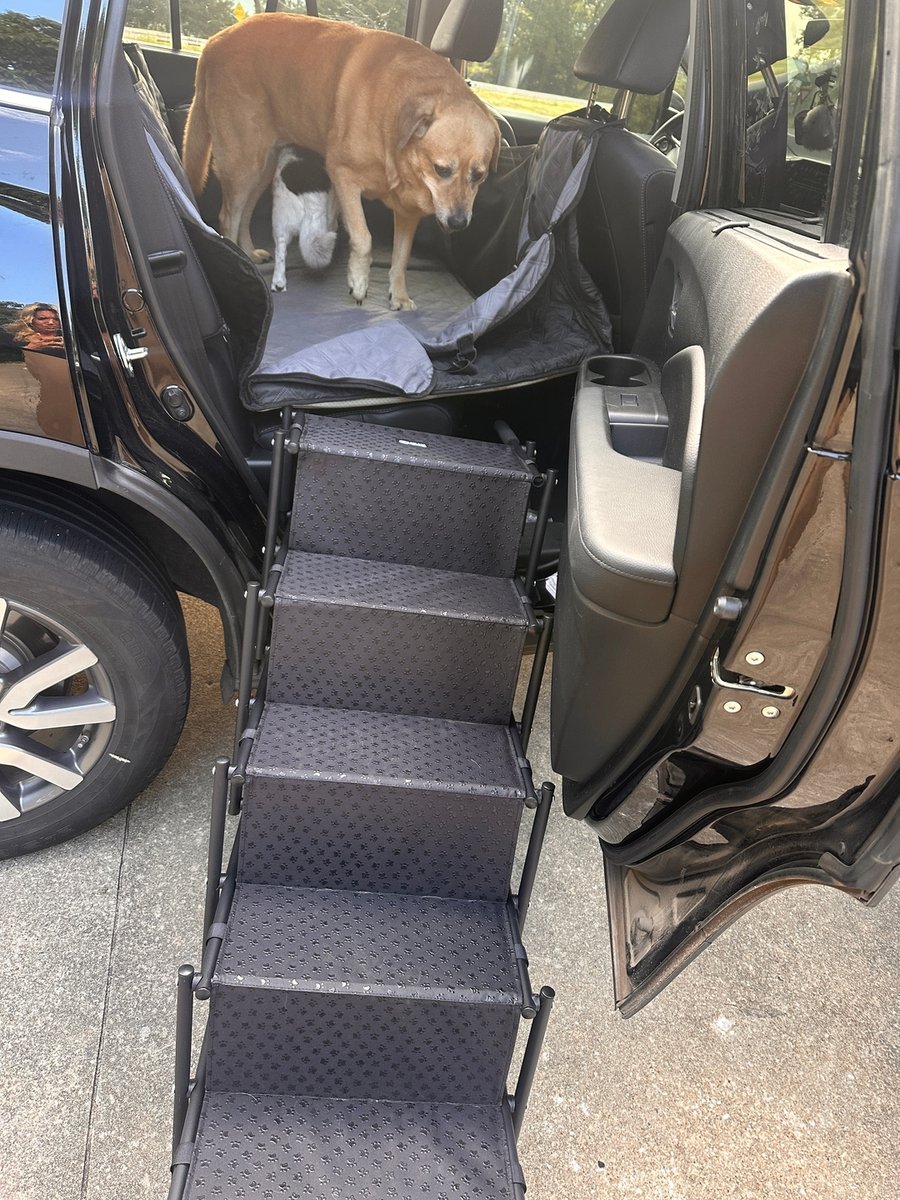
My EM Dutchess LOVES to take rides with me around our small farm town! Last summer we tried to get her to load up and come with us on several rides and you could tell she REALLY wanted too but refused to jump into the bed of the truck which is a 1970s long bed Chevy so it’s pretty low anyways…and it broke my heart…the Big ASS dog stairs gave my Dutchess our rides together back and as she is grey faced and 8yrs old now I want her to enjoy every day with ease so we can take rides as long as possible!
Laci
5 Step
Fits great, dogs love it!
Barbara
5 Step
Really high quality steps. My 90lb mastiff was hesitant at first but with some treats training he now runs up and down these. My back of tailgate is 35” high and the 5 step works great.
Anthony
Mastiff, 90 lb5 Step
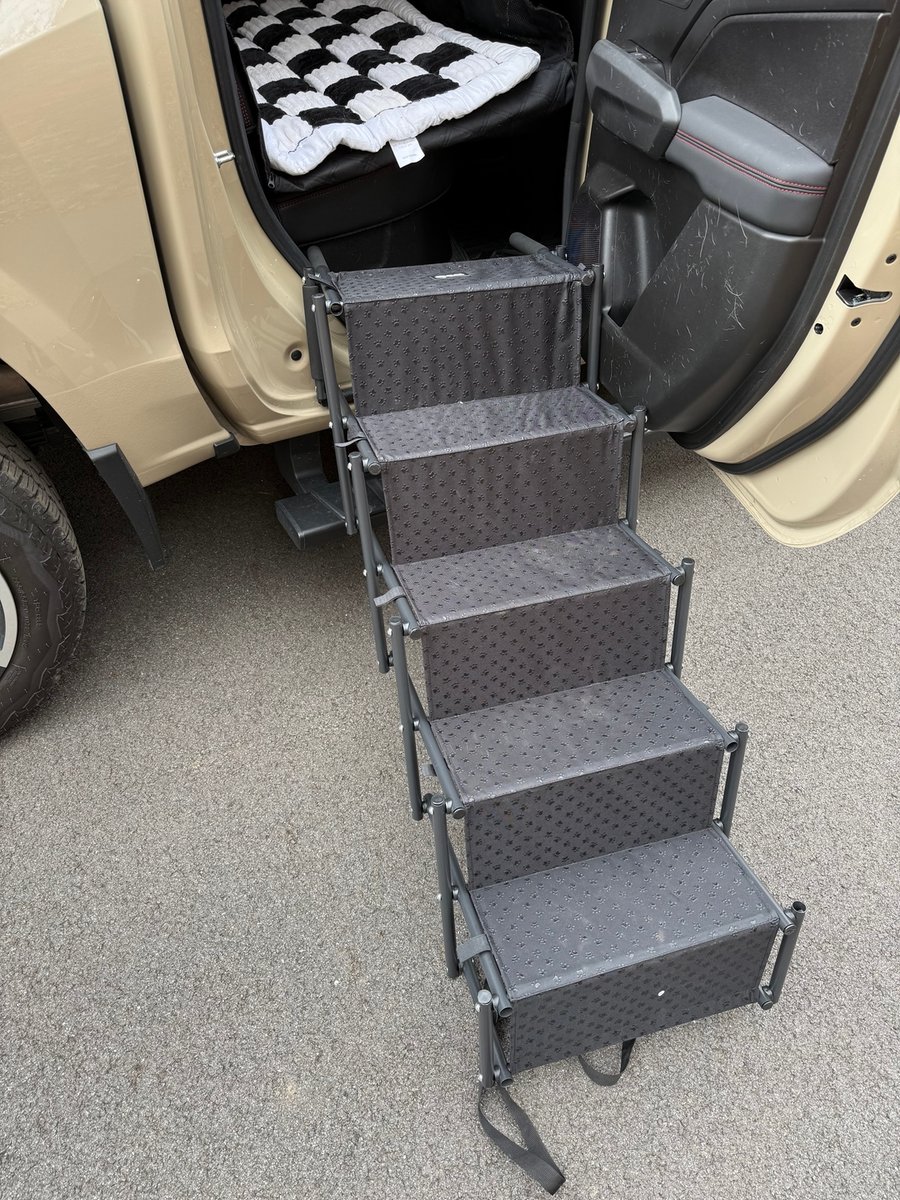
Griffin loves his new steps and makes it so much more efficient for him to go in the Tundra.
Christopher
5 Step
Works really well with my Sierra 1500! Stable when using with my 100lb dogs. Tried a couple of other ramps and the biggest issue was the ramp not gripping on pavement and sliding out while my dogs were walking up. Didn't have any issues with our Big Ass Steps. Definitely the best steps out there!
Sandy
100 lb dog
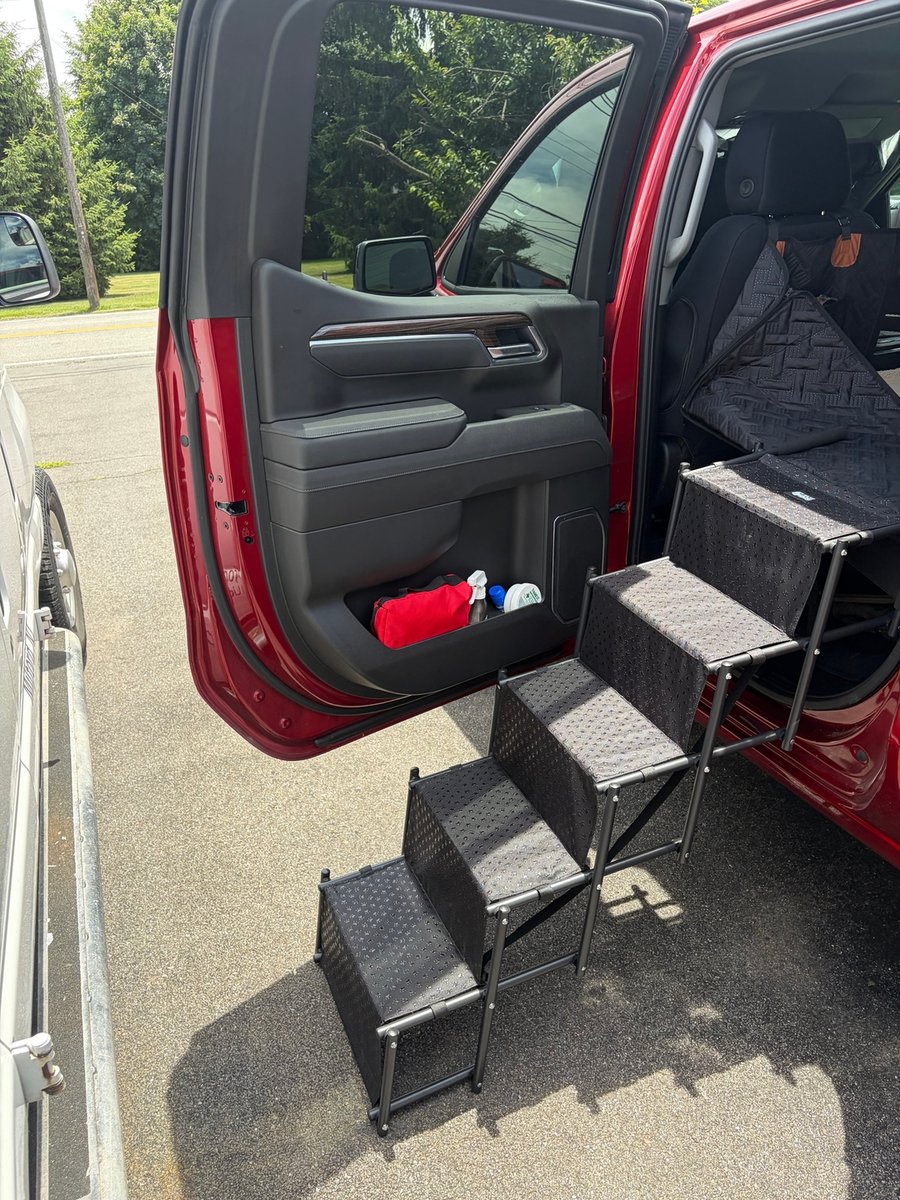
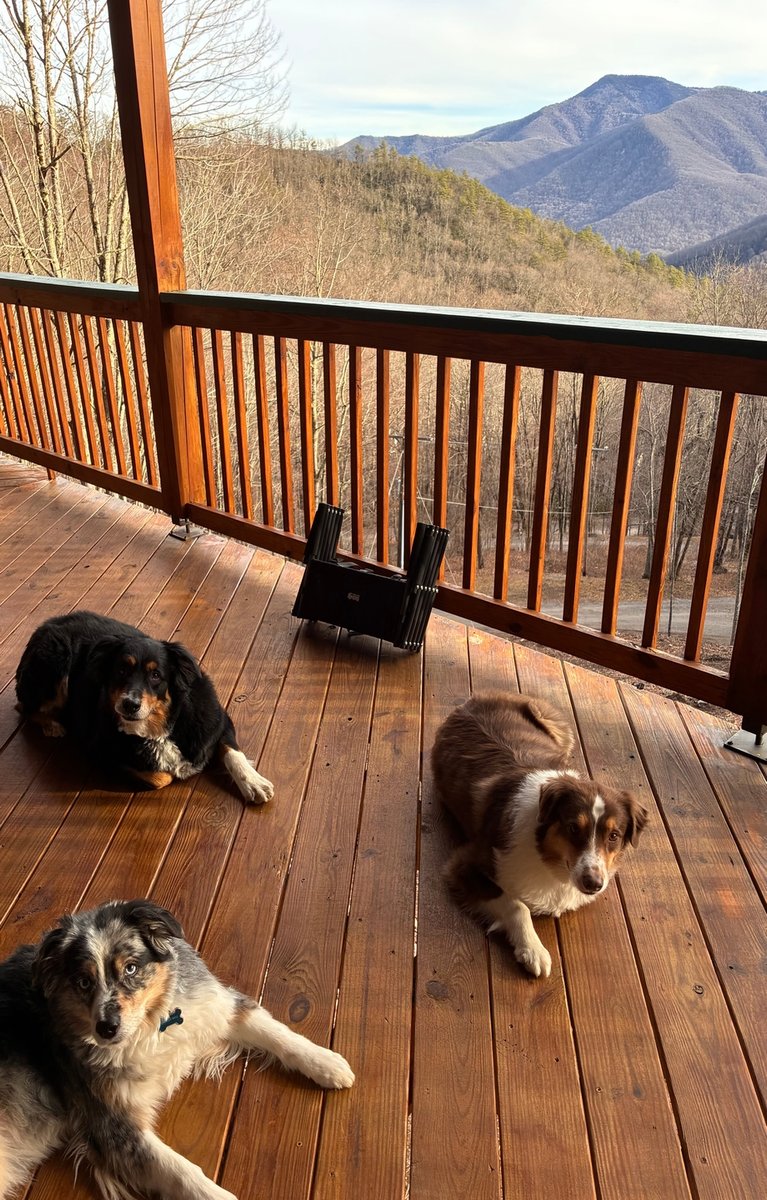
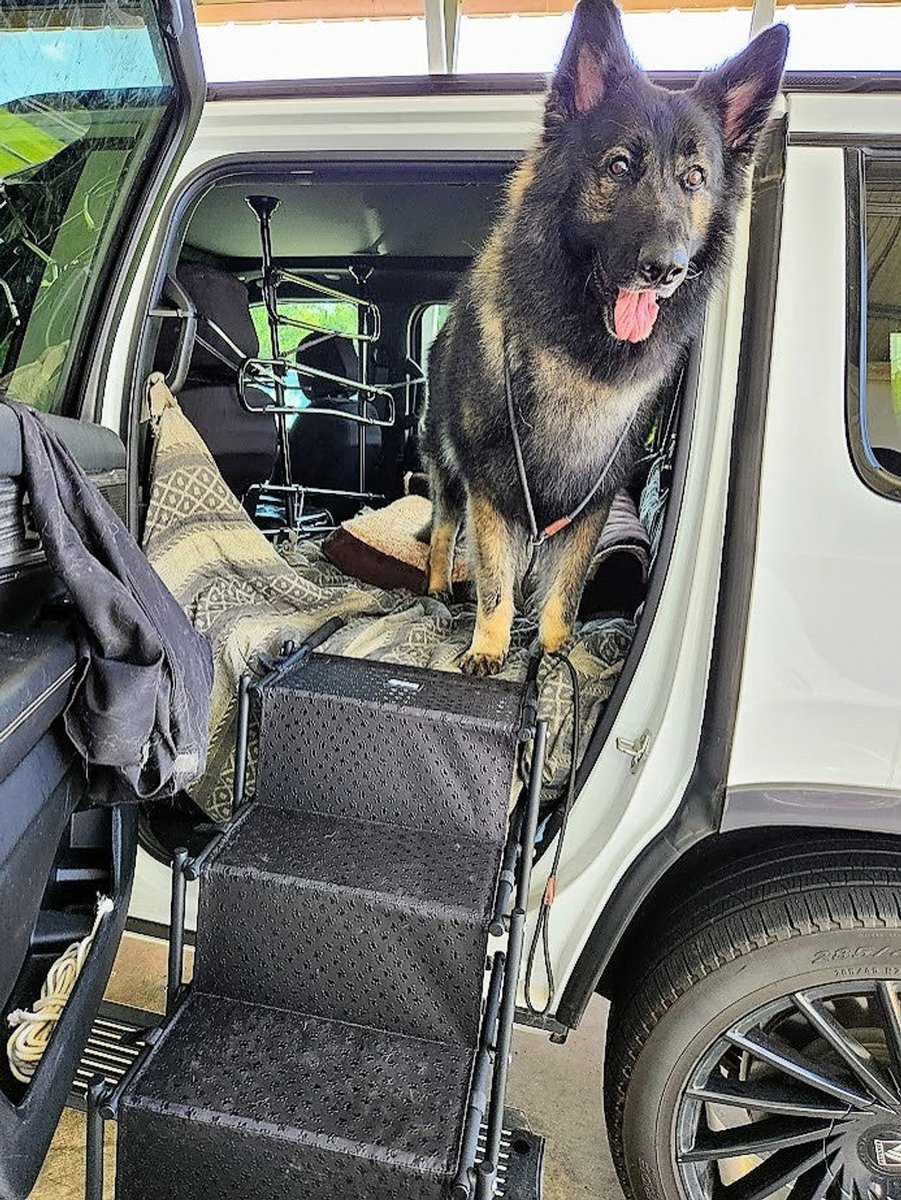
Jasper, Archie, & Ozzy love their new Big Ass Steps. Our Mom loves them too! ❤️They make getting in and out of Mom’s Chevy Trailboss 4x4 so much easier! Mom has a hammock covering the back seat for us, and well she is rather OCD about everything especially her new truck. She loves that these steps wipe clean, fold easily and store nicely under the seat. Plus since us dogs are all different ages we can get up and down easily and quickly now with no help from her. Which makes our travel experiences (*short & long trips) especially hikes in the mountains which we all love to do and long road trips with several bathroom stops a little less hectic.
Georgia
5 Step
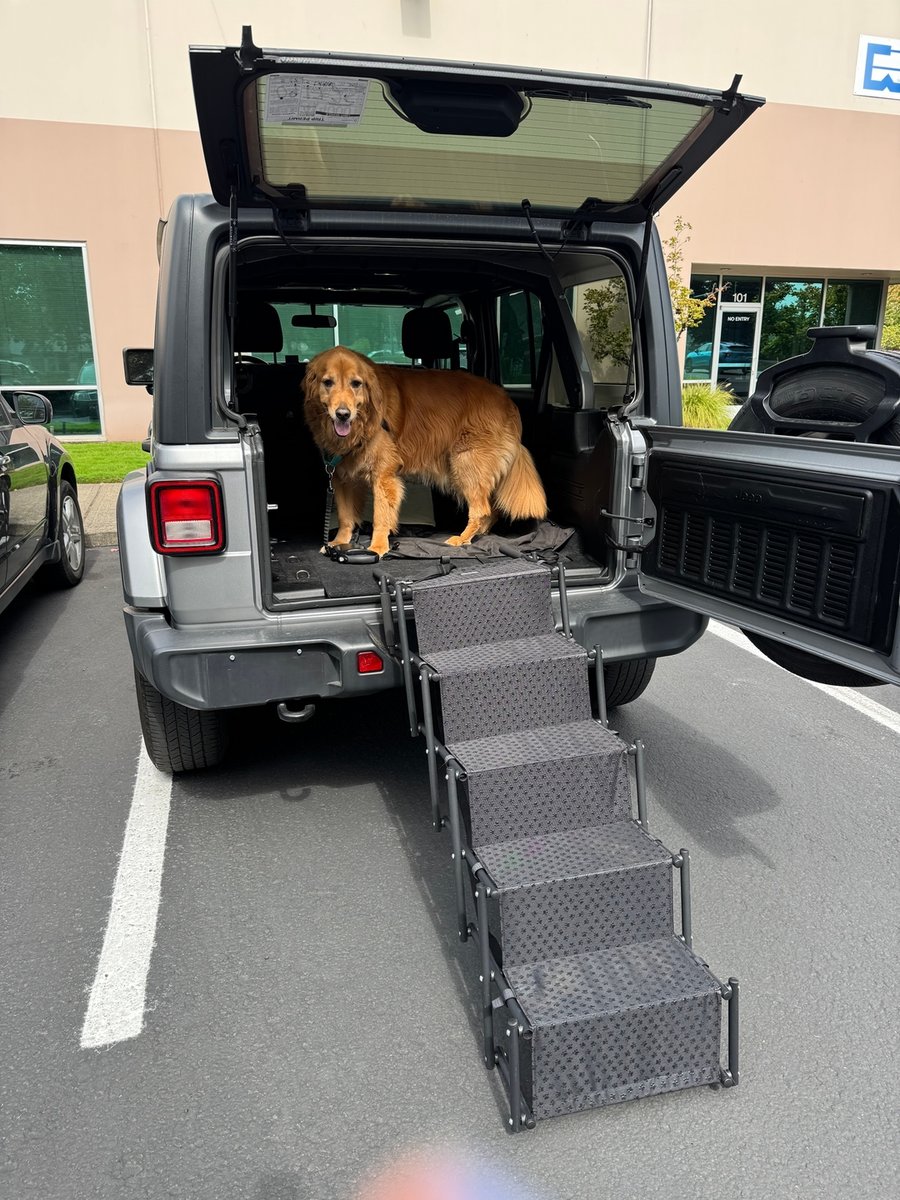
These are so easy for me to use! Doesn’t take long at all to set up and take down. My dog just walks right up into the jeep. No more picking him up and hurting my back. He seems to prefer the steps lol. I highly recommend this product!
Angela
5 Step
Thanks! I love it and so does my blood hound and Chesapeake.
Scott
Bloodhound / Chesapeake Bay Retriever
These stairs are so lightweight and easy to manage. Really convenient. Love them!
Erica
4 Step
So far so good
Have a 6 month old cane Corso wanted to train him now before he gets too big
Didn’t want him jumping out risking injury
Michael
Cane Corso
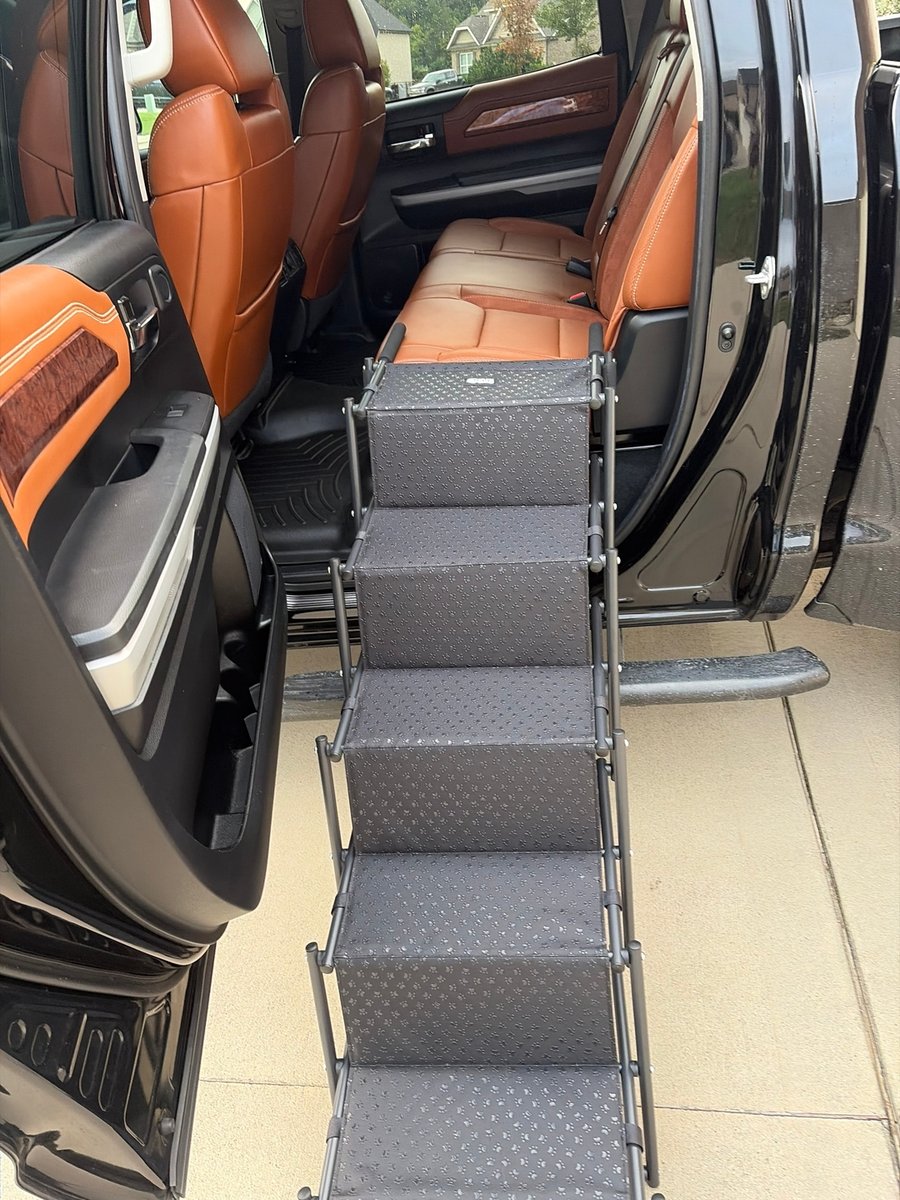
Perfect fit for my Toyota Tundra Crewmax 4x4. Gibbs and Wally have the hops to jump in and out but the steps are a lifesaver, and joint savers too! Gibbs beat me out of two pieces of salami to learn the ropes, but Wally went up and down like an amBASSador on the first try. It also ensures my surgically repaired back is never forced into action!
Jeff
Our Big Ass Steps arrived last week, yay! Pictured is Willie in the jeep after climbing up, still having a little problem going down (he wants to jump). The size is perfect, fits in the door opening and the height is perfect at 36″.
Rose
Love having the stairs but they are a little too wide to fit in the door of a Honda Pilot. I angle it and make it work but only one of "legs" sets on the chair. I wedge it in so it stays fairly sturdy. My girl doesn't seem to mind and loves having stairs to get in the car. They are very well made and I would highly recommend them!
Heather
5 Step
Chevy Colorado rear door is tight fit for the steps. Top support bars cannot rest on the threshold. Lab can, however, climb and enter. Just means I’m scratching the vinyl inside the door.
Kenneth
Labrador Retriever5 Step
New, upgraded model
Built for dogs that break stuff.
The pet industry thinks a "large dog" tops out at 50–80 lbs. Ours are rated for 200 and still fold flat enough to live in the trunk. Tap the dots.
200 lbsWeight rating, set at 90°
8 lbs4 Step weight (5 Step under 13)
28–40"Rise covered by the two sizes
47.24"5 Step length set up, 36.61" tall
Rated for 200 lb
Why we made them
Steps couldn't hold the weight. So we built our own.
"The world thinks a 'large dog' weighs 50 pounds. We know better. We share our couches with 150."
It started with Dino, a Neapolitan Mastiff, and Shelby, an English Mastiff. Living with 200 pounds of dog showed us how badly the pet industry had failed the giants: harnesses rode up into armpits, beds flattened in a season. Nobody built gear for our dogs, so we built it ourselves.
As seen on
CBSNBCABCFOX
The lifeSPAN™ kit
Steps protect the joints. Finish the job.
Big Ass Steps are the "Protect" in lifeSPAN™. These ride along in the same truck.



 Rated for


